All Articles
The Rate Card Is Dead: Why Charging Rent for 'Features' Is Financial Suicide in an Outcome Economy
This is Part 2 of my series on the collapse of the traditional software industry. In Part 1, How “Vibecoding” and The Outcome Economy Are Killing the SaaS Dinosaurs, I explained how AI is making software production free. Today, let’s talk about why your pricing model is about to bankrupt you.
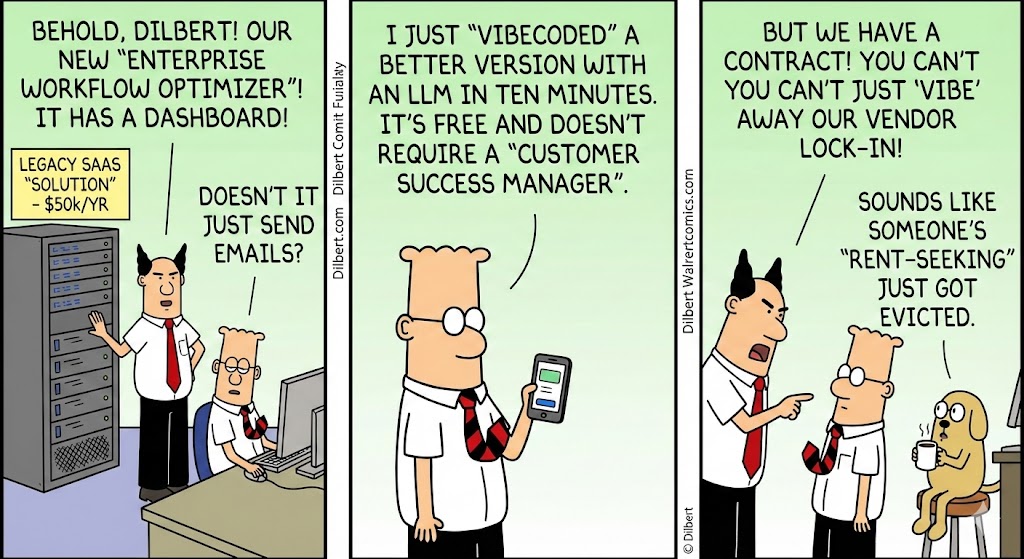
The Rent Is Too Damn High: How Vibecoding and The Outcome Economy Are Killing the SaaS Dinosaurs
Let’s start with a bedtime story that is currently keeping the General Counsel of a $10 billion company awake at night. In June of this year (2025), a developer named Michael Luo (known online as “AzianMike”) decided he was tired of paying DocuSign $15 a month to sign three PDFs.1 He didn’t complain on X (formerly Twitter).

The Digital Billboard Dilemma: Why We Are Still Using Floppy Disks in a 5G World
Let me give you some context before I start ranting. I’ve been in the trenches of media technology for 25 years. I was writing code for Set-Top Boxes (STBs) when “on-demand” meant walking to Blockbuster. I built the architecture for the first DVRs that let you pause live TV. I have worked on engineering the streaming pipes that allow you to binge-watch in 4K without buffering and to figure out how to connect a second screen device to a Satellite Pay TV system.
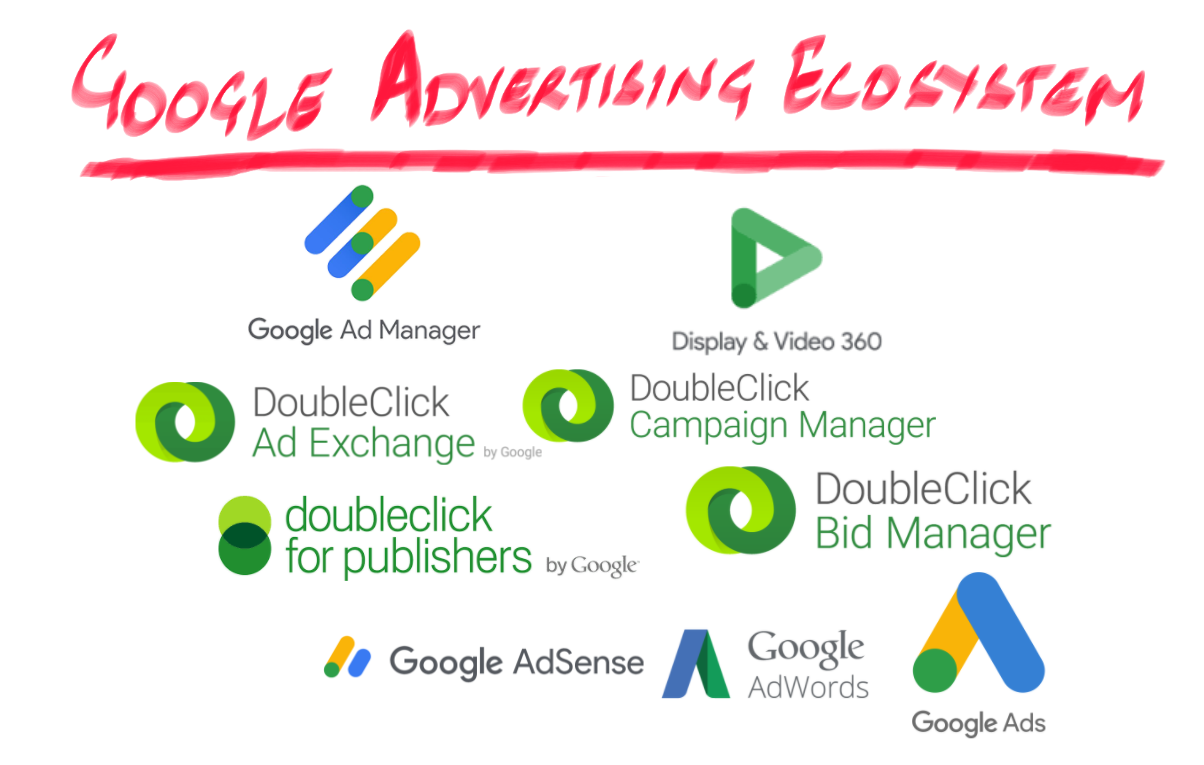
Decoding the Google Video Ad Ecosystem for OTT Platforms and CTV Publishers
If you manage an advertisement driven OTT platform on connected TVs that streams Video on Demand ( VoD) or 24 / 7 linear live content, then you would have definitely come across Google Ad ecosystem. Google leads the world in online advertising. Whether its search, websites, mobile apps and now, connected TVs and other streaming devices like Fire TV and Roku, Google commands the first port of call when someone needs to generate revenue online using advertising.